
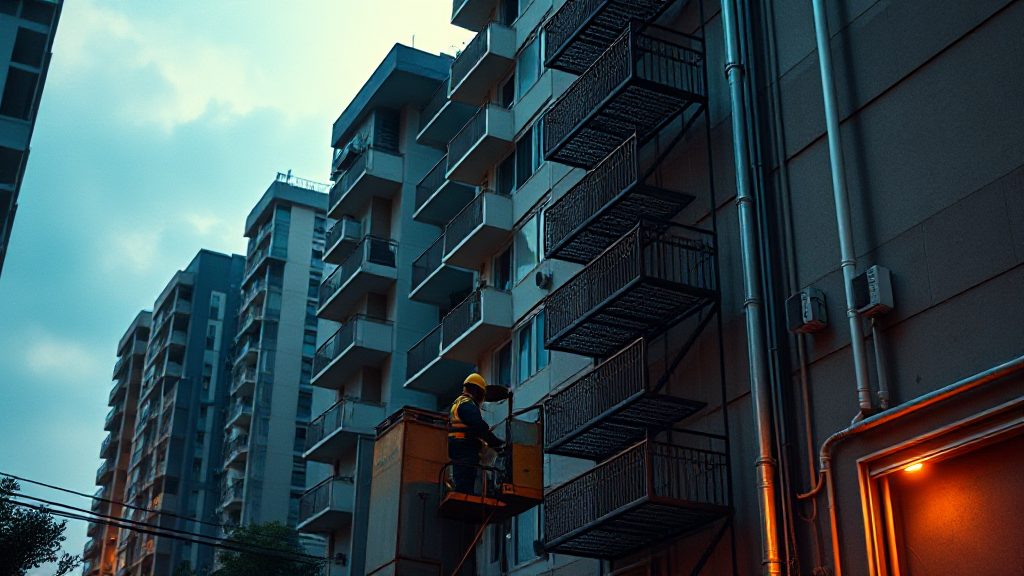
Shared Stacks and Shared Blame in Vila Andrade Low-Rise Buildings
You are standing in your ground-floor apartment in Vila Andrade when water begins to seep from the base of the toilet or rise through the shower drain. Nothing in your unit was running. The water comes from somewhere above, pushed by the habits of a neighbor you may never have met. In a low-rise building, this is not a plumbing mystery—it is the predictable result of a shared stack doing exactly what shared stacks do when they are blocked.
For residents of small apartment blocks, understanding the vertical plumbing system is the first step toward fixing the problem and assigning responsibility fairly. If you need immediate help, a desentupidora Vila Mariana São Paulo SP can clear the line, but knowing how waste travels through your building will save you from repeat floods and neighbor disputes.
The vertical stack: how one pipe serves every floor
Most low-rise buildings in Vila Andrade rely on a single vertical soil stack that runs from the top floor down to the ground-level sewer connection. Every sink, shower, toilet, and washing machine on each floor connects to this stack through branch lines. When you flush or drain water, it does not travel in its own private pipe to the street—it joins a collective column of waste that all units share.
Gravity does most of the work. Water and solids fall through the stack, and the vertical drop creates a siphon effect that pulls air behind the flow. That air has to come from somewhere. Without proper venting, the falling waste can create pressure changes that suck water out of traps or push sewer gases back into apartments. The stack is not just a drain; it is a pressure system that depends on every connection being correctly installed and unobstructed.
In a building with four or five floors, the stack carries waste from dozens of fixtures. A single blockage—whether from grease, wipes, hair, or a foreign object—narrows the pipe and slows the entire column. Waste from upper floors then backs up behind the blockage and finds the nearest weak point. Often that weak point is the lowest fixture on the line: a ground-floor shower drain, a toilet base, or a floor drain in a service area.
Why the ground floor floods first
The ground-floor apartment is the canary in the coal mine of vertical plumbing. Because it sits at the bottom of the stack, it receives the full volume of everything that fails above. When a blockage forms in the main stack or the building drain that leads to the street, water has nowhere to go but up and out through the lowest openings. The tenant on the ground floor sees the symptom, but the cause may be three floors above.
This is why a ground-floor flood is rarely that tenant’s fault. A single flush from the top floor can send a surge down the stack that overwhelms a partially blocked line and erupts in the lowest unit. The person who owns the clog may never see a drop of water in their own apartment. Understanding this asymmetry is essential for building managers and residents alike: the unit that floods is often the victim, not the source.
Low-rise buildings also tend to have fewer cleanouts and shorter branch runs, which means a blockage in one unit’s branch can affect the shared stack more quickly than in a high-rise with more buffer volume. When residents call a desentupidora Vila Mariana for an emergency, the technician often finds the blockage at a junction where multiple units meet—not inside the flooded apartment itself.
Venting failures and the traps that betray you
Every fixture in your apartment has a trap—the U-shaped pipe under the sink or the water seal inside the toilet—that holds a small amount of water to block sewer gases. That water seal depends on air pressure staying balanced. When the venting system fails, the trap loses its water and becomes an open door for odors and gases.
Venting failures are common in older low-rise buildings where vents may be undersized, clogged by debris or bird nests, or improperly connected during past renovations. A blocked vent can cause gurgling sounds when you drain a sink, slow drainage across multiple fixtures, and the unmistakable smell of sewer gas in bathrooms or kitchens. These symptoms often appear before a full blockage and serve as an early warning that the stack is struggling to breathe.
Signs your building’s venting is compromised
- Gurgling or bubbling sounds from drains after a neighbor uses water
- Persistent sewer odor in bathrooms or near floor drains
- Water levels in toilet bowls that fluctuate without being flushed
- Slow drainage in multiple fixtures at the same time
- Rattling pipes when water runs in another unit
If you notice several of these signs, the issue is likely in the shared vent or stack, not in your own fixture. A professional inspection can determine whether the vent is blocked or the stack is partially obstructed before a small problem becomes a ground-floor flood.
What actually blocks a shared stack
Shared stacks collect everything that residents send down their drains, and some materials are far more damaging than others. Grease and cooking oil cool and congeal on pipe walls, gradually narrowing the opening. Hair and soap scum bind together and catch other debris. Flushable wipes—despite the label—do not break down quickly and often snag on rough joints or tree roots that have infiltrated the line.
In older buildings, the pipe material itself can be a problem. Cast iron stacks corrode and develop rough interiors that trap waste. Clay or concrete building drains may have root intrusions from street trees. Even a small offset or sag in a horizontal run can create a low spot where solids settle and accumulate. Over time, these small imperfections become the anchor points for a full blockage.
The person who pours grease down the kitchen sink may never connect their habit to the flood two floors below. That is why building-wide education and periodic preventive maintenance matter more in shared-stack buildings than in single-family homes. A desentupidora em Vila Mariana São Paulo SP can clear the immediate blockage, but preventing the next one requires cooperation from every unit on the stack.
Who is responsible when the stack clogs?
Responsibility in a shared plumbing system is rarely clear-cut, and that ambiguity is a major source of conflict in small buildings. In general, the building’s main stack and the horizontal building drain are considered common areas, maintained by the condominium association through monthly fees. The branch lines inside a private unit—from the fixture to the point where they join the stack—are usually the owner’s responsibility.
But the boundary is not always obvious. A blockage that starts in one unit’s branch and backs up into the shared stack may be treated as a shared expense if the damage affects common areas or multiple units. Conversely, a clog caused by a specific tenant’s misuse—such as flushing wipes or pouring grease—can sometimes be attributed to that tenant. Without a clear building convention or professional assessment, these disputes can drag on while the plumbing remains vulnerable.
Building managers in Vila Andrade low-rises often benefit from a written maintenance policy that defines common versus private plumbing, schedules periodic inspections, and establishes a protocol for emergencies. When everyone knows who calls the desentupidora and who pays for what, the ground-floor flood becomes a manageable event rather than a neighborhood feud.
Practical steps for residents and building managers
The most effective defense against shared-stack disasters is prevention combined with fast response. Residents should never pour grease down drains, should use drain screens to catch hair and food particles, and should avoid flushing anything other than toilet paper. Building managers should schedule annual or biennial inspections of the main stack and building drain, especially in buildings older than twenty years.
When a blockage does occur, quick action limits damage. Shut off water use in affected units, call a professional emergency service, and document the incident with photos and notes. A qualified technician can use cameras to locate the blockage, hydrojetting to clear grease and scale, and proper venting checks to ensure the system is breathing correctly after the clog is removed.
Finally, communicate. A simple notice in the lobby explaining how shared stacks work and why individual habits affect everyone can reduce the frequency of blockages. When neighbors understand that one unit’s clog becomes everyone’s problem, they are more likely to treat the plumbing as a shared resource—because that is exactly what it is.

Leave a Reply